How much does it cost to install a wheelchair ramp in 2026? The cost to install a wheelchair ramp typically ranges from $1,500 to $10,000. Many professionally installed residential ramps fall between $3,000 and $7,500, while longer or more complicated systems can exceed $10,000.
The final wheelchair ramp cost depends primarily on three things:
- The ramp material you choose
- The size and length of the ramp
- The amount of site preparation required
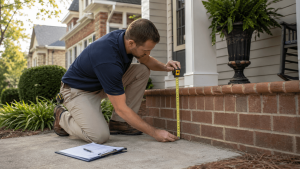
For homeowners in Charlotte and the surrounding area, the only reliable way to determine the cost is through an in-home assessment. Carolina Home Access evaluates the entrance, measures the total rise, discusses the client’s preferred ramp type, and determines which accessibility and safety features the design requires. The customer then receives one complete project estimate before work begins.
Average Wheelchair Ramp Cost by Type
Different ramp materials have different equipment, installation, and maintenance costs. Based on current national industry pricing, homeowners can use the following ranges for preliminary planning:
| Wheelchair ramp type | Estimated cost |
| Threshold ramp | $65–$500 |
| Portable ramp | $300–$1,500 |
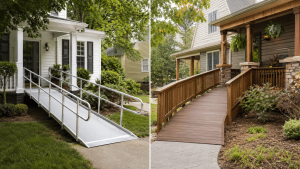
| Modular aluminum ramp, professionally installed | $1,500–$10,000+ |
| Custom wood ramp, professionally installed | $2,000–$10,000+ |
| Typical residential ramp project | $3,000–$7,500 |
These figures are industry estimates rather than guaranteed Carolina Home Access prices. Every home has a different entrance, yard, elevation, and available installation area.
The residential aluminum ramps can start around $1,000 and exceed $10,000. Its estimated custom wood ramp cost ranges from $2,000 to more than $10,000.
A professionally designed aluminum system can cost approximately $180 to $225 per linear foot with installation and $160 to $200 for self-installation.
How Much Does a Modular Aluminum Wheelchair Ramp Cost?
A professionally installed modular aluminum wheelchair ramp usually costs between $1,500 and $10,000 or more. A shorter, straight system may remain near the lower end of that range, while a long ramp with platforms, turns, or a switchback configuration can cost considerably more.
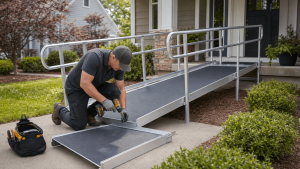
Aluminum ramps are assembled from prefabricated sections. This makes them faster to install than custom wood ramps and often more economical.
A modular aluminum ramp may be a good choice when:
- The client needs the ramp installed quickly.
- The ramp is needed temporarily after an injury or surgery.
- The system may need to be reconfigured later.
- The family expects to move.
- Lower maintenance is important.
- Installation speed matters more than matching the home’s architecture.
Carolina Home Access can often install a modular aluminum ramp in one day, sometimes even same day, after the appropriate design and materials have been determined.
How Much Does a Custom Wood Wheelchair Ramp Cost?
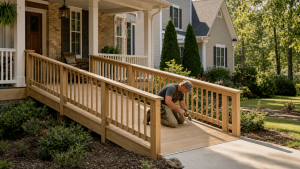
A professionally constructed wood wheelchair ramp generally costs between $2,000 and $10,000 or more. Wood ramps often cost more than modular aluminum systems because they require additional on-site labor.
Each component must be measured, cut, assembled, and finished for the individual property. Depending on its size and complexity, a custom wood ramp commonly takes two to four days to install.
Homeowners may prefer wood when:
- The ramp will remain in place for many years.
- Matching the home’s porch or deck is important.
- The entrance has an unusual layout.
- The homeowner wants a more integrated appearance.
- A modular configuration does not fit the property well.
A custom wood ramp can look like a natural extension of the house. However, that appearance can increase the cost because of the extra labor, materials, finishing, and future maintenance involved.
Wood may also need periodic cleaning, sealing, staining, or repair. These long-term expenses should be considered alongside the initial wheelchair ramp installation cost.
How Much Do Portable and Threshold Ramps Cost?
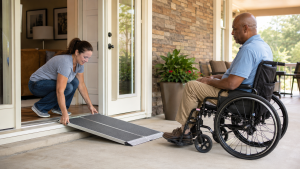
Portable wheelchair ramps generally cost between $300 and $1,500, depending on their length, material, weight capacity, and intended use. Smaller threshold ramps commonly cost between $65 and $500.
Portable ramps can be useful for:
- One small step
- Raised door thresholds
- Vehicle access
- Temporary recovery
- Visiting a family member’s home
- Entrances where a permanent system is impractical
A portable product is not automatically suitable simply because it fits across a step. The vertical rise, ramp length, wheelchair weight, landing area, and manufacturer’s instructions must all be considered.
A short ramp placed over a large rise can create an excessively steep slope. That may make a manual wheelchair difficult to propel uphill and difficult to control while descending. It can also make the transition uncomfortable for someone using a power wheelchair or scooter.
Carolina Home Access evaluates the entire entrance before recommending whether a portable, modular, or custom ramp is appropriate.
What Determines the Cost to Install a Wheelchair Ramp?
Although national price ranges are helpful, three factors have the greatest effect on the final Carolina Home Access estimate.
Ramp size and required length
The ramp’s size is often the largest cost factor. A higher entrance requires a longer ramp, which means more material and installation labor.
The accessibility benchmark commonly used for ramp slope is 1:12. This means approximately 12 inches of ramp run are needed for every inch of vertical rise.
For example:
- A 12-inch rise may require approximately 12 feet of ramp.
- An 18-inch rise may require approximately 18 feet.
- A 24-inch rise may require approximately 24 feet.
- A 30-inch rise may require approximately 30 feet.
These examples do not include the additional space that may be required for platforms, landings, or changes in direction.
The U.S. Access Board’s technical guidance for ramps explains the design standards for slope, landings, handrails, width, and edge protection.
Ramp material
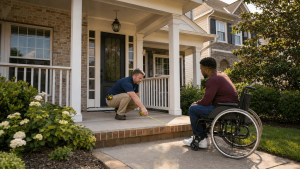
Material affects the initial price, installation time, appearance, maintenance, and whether the ramp can be relocated.
Modular aluminum is often faster to install and less expensive than a large custom wood structure. It can also be removed, reconfigured, or relocated if the client’s circumstances change.
Custom wood takes more time and labor but can blend more naturally with the home’s exterior. This may make it more appealing for homeowners seeking an attractive long-term installation.
The lowest initial price is not always the best value. The decision should consider:
- How long the ramp will be needed
- Whether the family expects to move
- Maintenance requirements
- Installation timing
- The home’s exterior appearance
- The client’s available budget
Carolina Home Access discusses these priorities during the assessment instead of automatically recommending one material for every property.
Unexpected site preparation
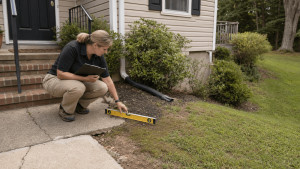
Some entrances require work before a ramp can be installed safely. Site preparation can include removing landscaping, addressing uneven ground, creating stable support points, modifying a walkway, or making space for a landing.
Potential site conditions include:
- Sloped or uneven terrain
- Shrubs, trees, or landscaping
- Drainage problems
- Damaged concrete
- Limited space near the entrance
- Existing decks or porches requiring modification
- Obstructions that prevent a straight ramp
- A door that lacks sufficient landing space
The more preparation required, the more the wheelchair ramp may cost. A professional assessment helps identify these conditions before construction begins.
Related Article: How to Make Your Home Wheelchair Accessible?
Why Do Landings and Turns Increase Wheelchair Ramp Costs?
A long ramp cannot always run straight out from the front porch. Property boundaries, driveways, landscaping, and nearby structures may require the system to turn.
A ramp that changes direction may need a larger level landing. The U.S. Access Board’s guidance specifies a 60-by-60-inch clear landing where an accessible ramp changes direction. Although ADA Standards generally do not govern a privately owned single-family home, these measurements provide valuable design benchmarks.
The U.S. Access Board’s explanation of ADA coverage confirms that the ADA generally does not apply to individually owned or leased private housing that is not used as a public accommodation. Residential work must instead satisfy the applicable state and local requirements.
Additional landings and turns affect cost because they require:
- More ramp components or lumber
- Larger platforms
- Additional handrails
- More support points
- More installation labor
- A more complicated design
This is why two homes with the same number of front steps may receive different wheelchair ramp estimates.
What Is Included in a Carolina Home Access Ramp Estimate?
Carolina Home Access provides one complete project price after assessing the home and discussing the client’s needs.
The estimate includes:
- Ramp materials
- Professional installation
- Accessibility and safety features required for the planned design
- Proper slope calculations
- Nonslip travel surfaces
- Platforms or landings included in the design
- Handrails where required
- The labor necessary to complete the quoted installation
The estimate is provided before work begins. Carolina Home Access does not rely on a generic price-per-foot figure because that number cannot account for the entrance configuration, total rise, material preference, site preparation, or client priorities.
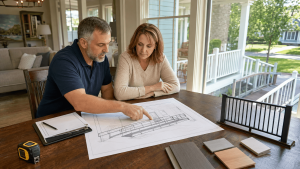
The assessment process begins by measuring the entryway and understanding what the client wants. The team then evaluates the slope, surface, handrails, landings, and applicable requirements before preparing the complete estimate.
Can Insurance Help Pay for Wheelchair Ramp Costs?
Standard health insurance does not automatically pay for a residential wheelchair ramp. Coverage depends on the insurance plan, the person’s medical needs, and whether home modifications are included.
Some homeowners may have other options.
The IRS states that certain improvements made primarily to accommodate a disability may qualify as medical expenses. Its examples include constructing entrance or exit ramps and modifying the areas in front of doorways. Review the IRS guidance for disability-related home improvements and consult a qualified tax professional before claiming a deduction.
Eligible veterans may also receive assistance through the Department of Veterans Affairs. The VA Home Improvements and Structural Alterations program supports certain medically necessary changes to a veteran’s primary residence. Eligibility and available benefits must be confirmed before work begins.

Does Carolina Home Access Offer Wheelchair Ramp Financing?
Carolina Home Access partners with Acorn Finance to help customers explore payment options with quick decisions and competitive terms.
Financing can allow a homeowner to complete a necessary accessibility project while spreading the cost over scheduled payments. Available loan amounts, rates, repayment terms, and approval decisions depend on the participating lender and the applicant’s qualifications.
Through Acorn Finance’s home-improvement lending marketplace, qualified applicants can compare personalized loan options. Checking initial offers uses a soft credit inquiry, although a lender may perform a hard credit inquiry if the applicant moves forward with an offer.
Customers should review the interest rate, fees, term, and total repayment amount before accepting financing.
How Can You Get an Accurate Wheelchair Ramp Estimate?
Online wheelchair ramp prices are useful for early planning, but they cannot account for your home’s actual entrance. A product price may also exclude delivery, landings, handrails, installation, site preparation, or other essential components.
Carolina Home Access follows a straightforward process:
- The team measures and evaluates the entryway.
- The client discusses their needs, preferences, timing, and budget.
- The team recommends a suitable ramp type and configuration.
- The design is checked for proper slope, nonslip surfaces, landings, and handrails.
- The client receives one complete project estimate before work begins.
- Professional installation is scheduled after the client approves the plan.
Carolina Home Access installs modular aluminum, custom wood, and portable wheelchair ramps throughout Charlotte and the surrounding communities in Mecklenburg, Union, Gaston, York, and Lancaster counties.
A professional assessment is the best way to understand how much it will cost to install a wheelchair ramp at your specific home.
You can book a consultation to talk about the needs of your property for free.
Related Article: Outdoor Stair Lifts: Options and Costs for Charlotte Homes (2026 Guide)


